Oct 2026 Out 2026
Misinformation Detection with AI at BAR 2026 Desinformação com IA no BAR 2026
Invited talk · BAR 2026 · Universidade Feevale · Results of the Misinformation Identification with LLMs project Palestra · BAR 2026 · Universidade Feevale · Resultados do projeto Identificação de Desinformação com LLMs
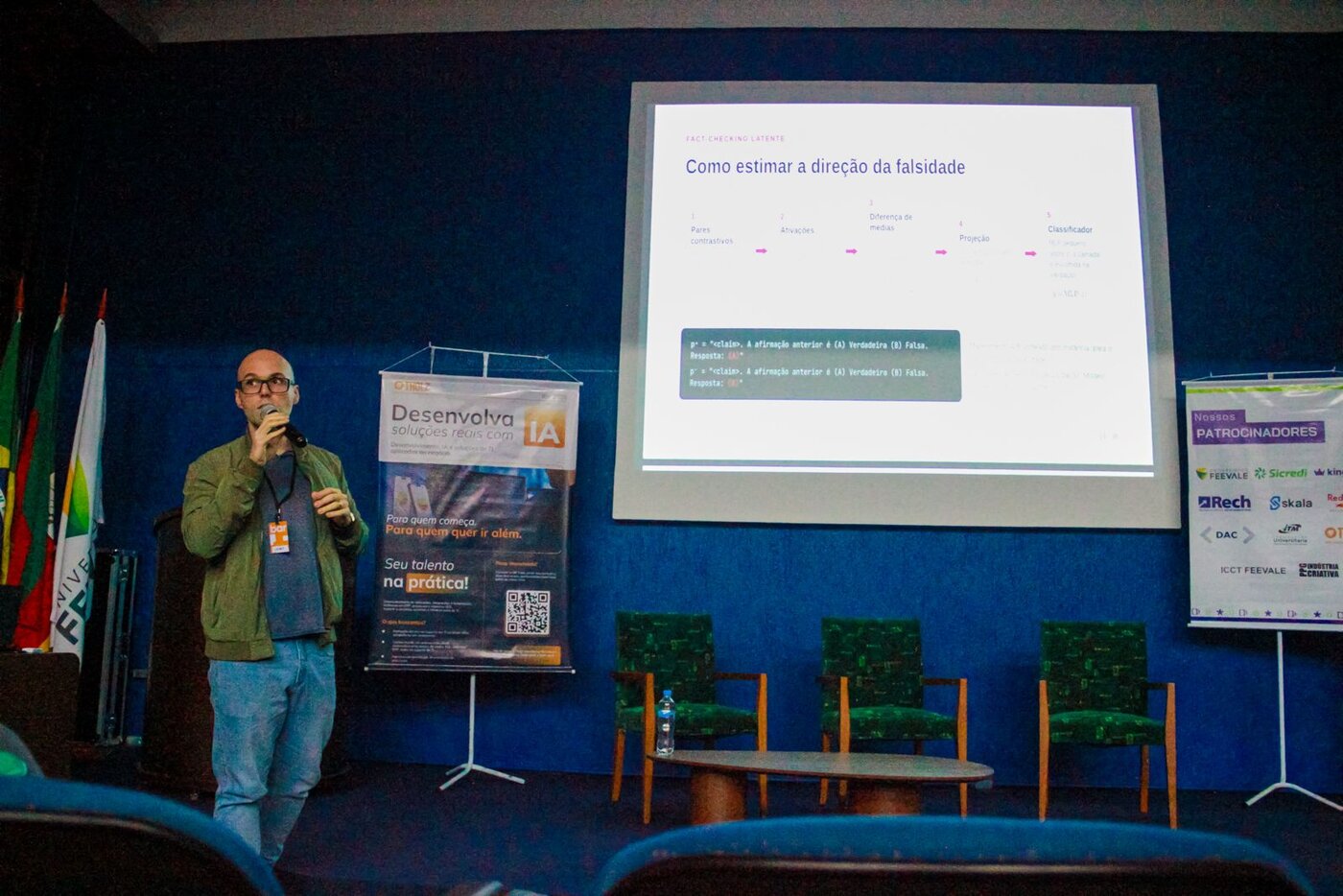
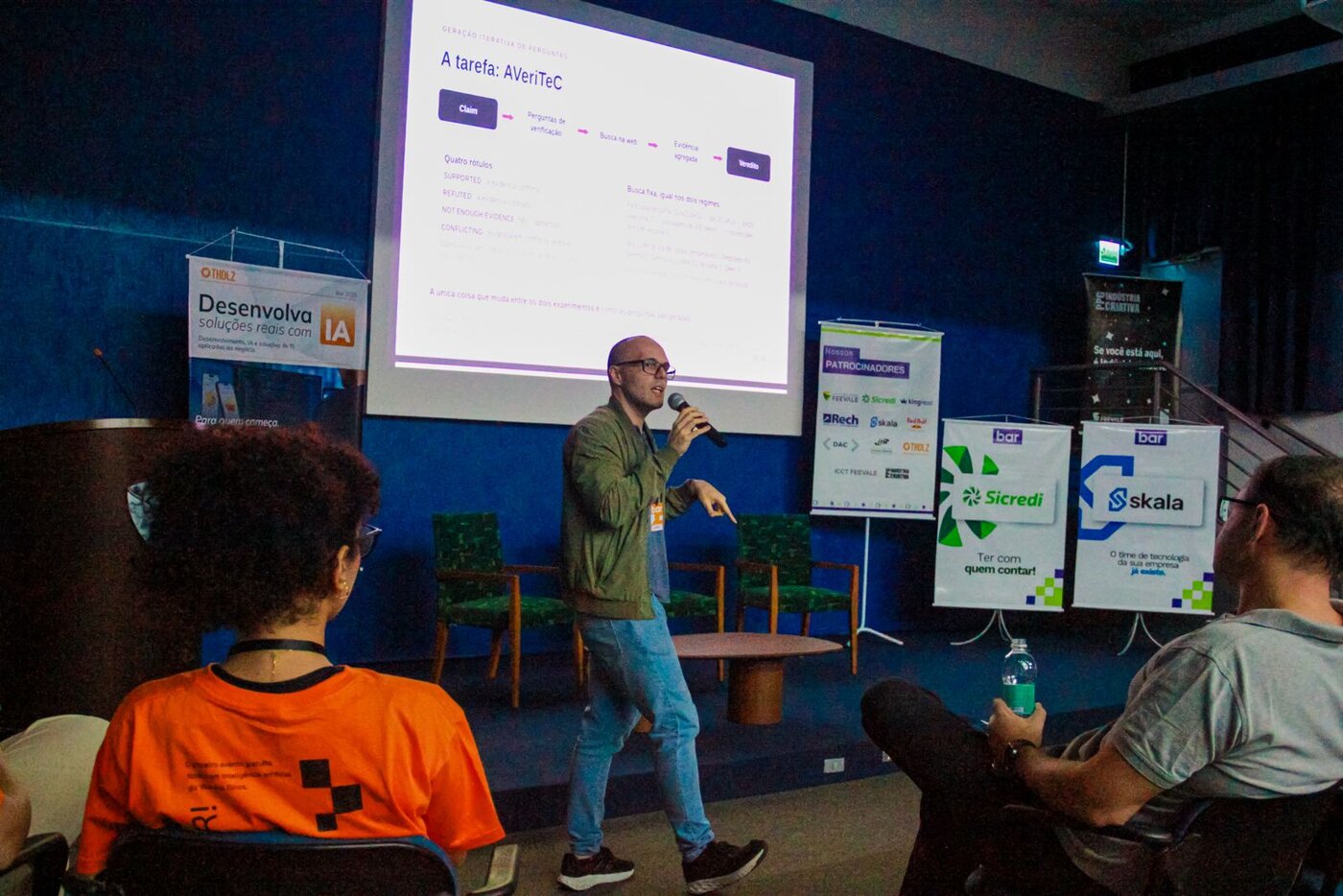
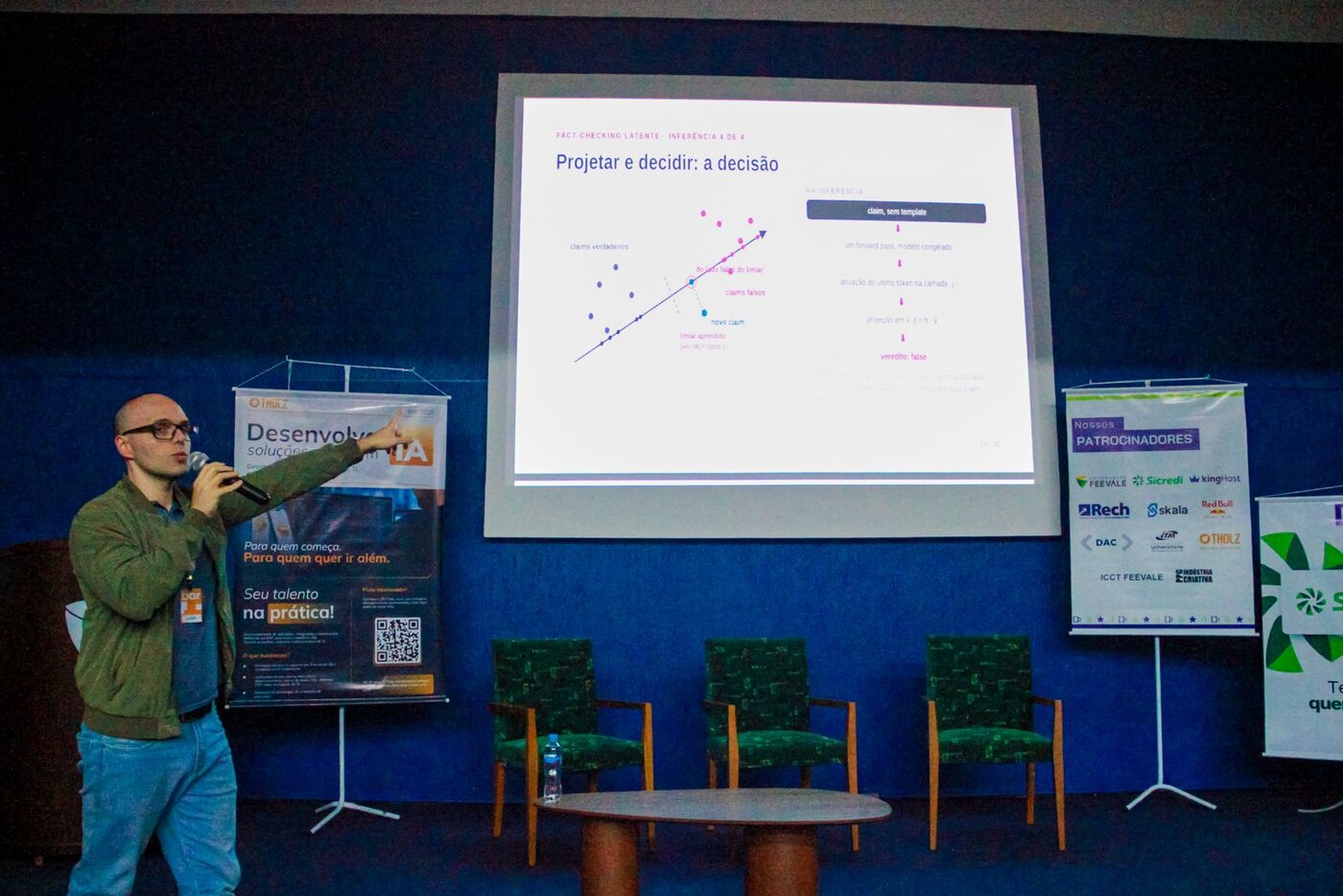
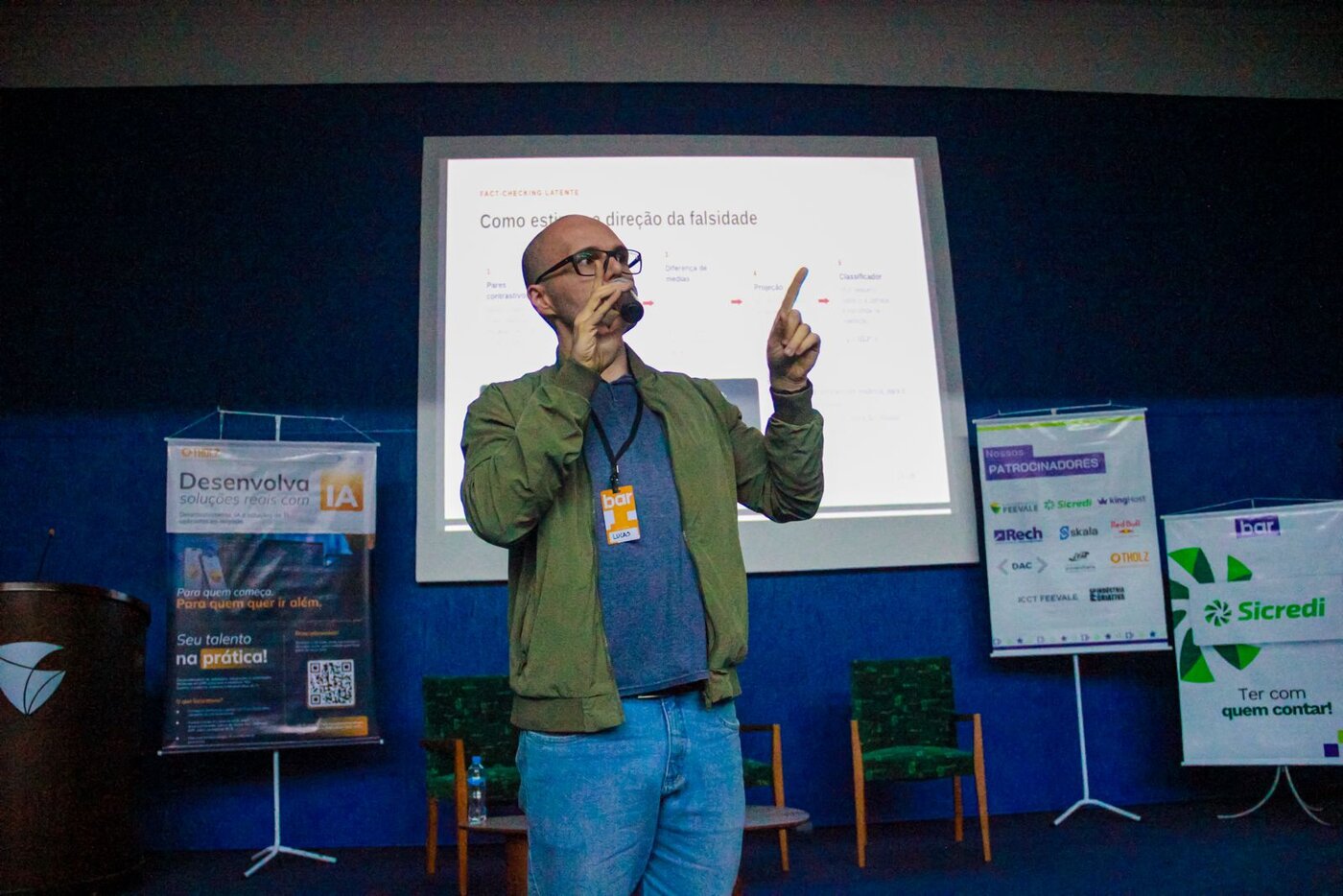
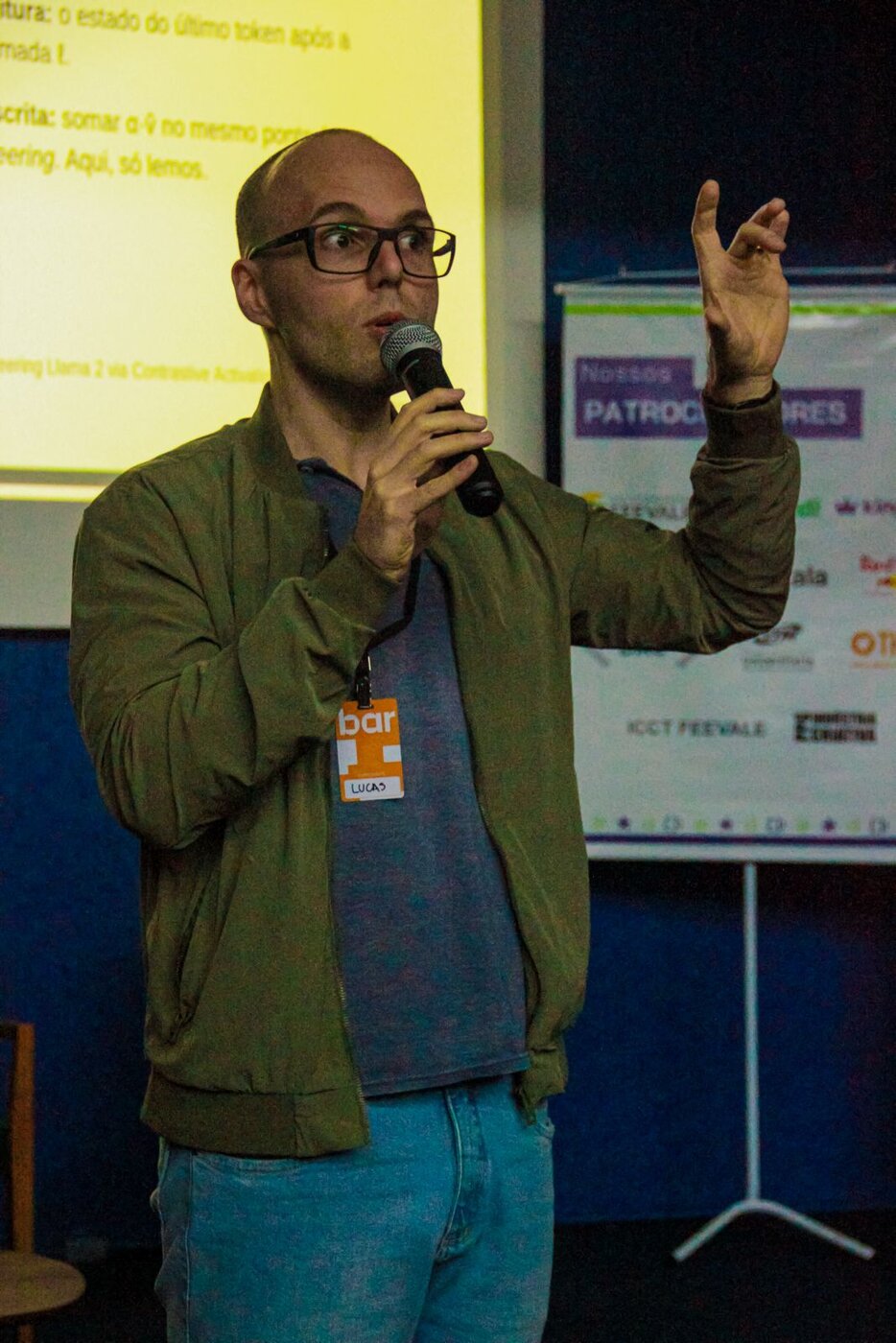
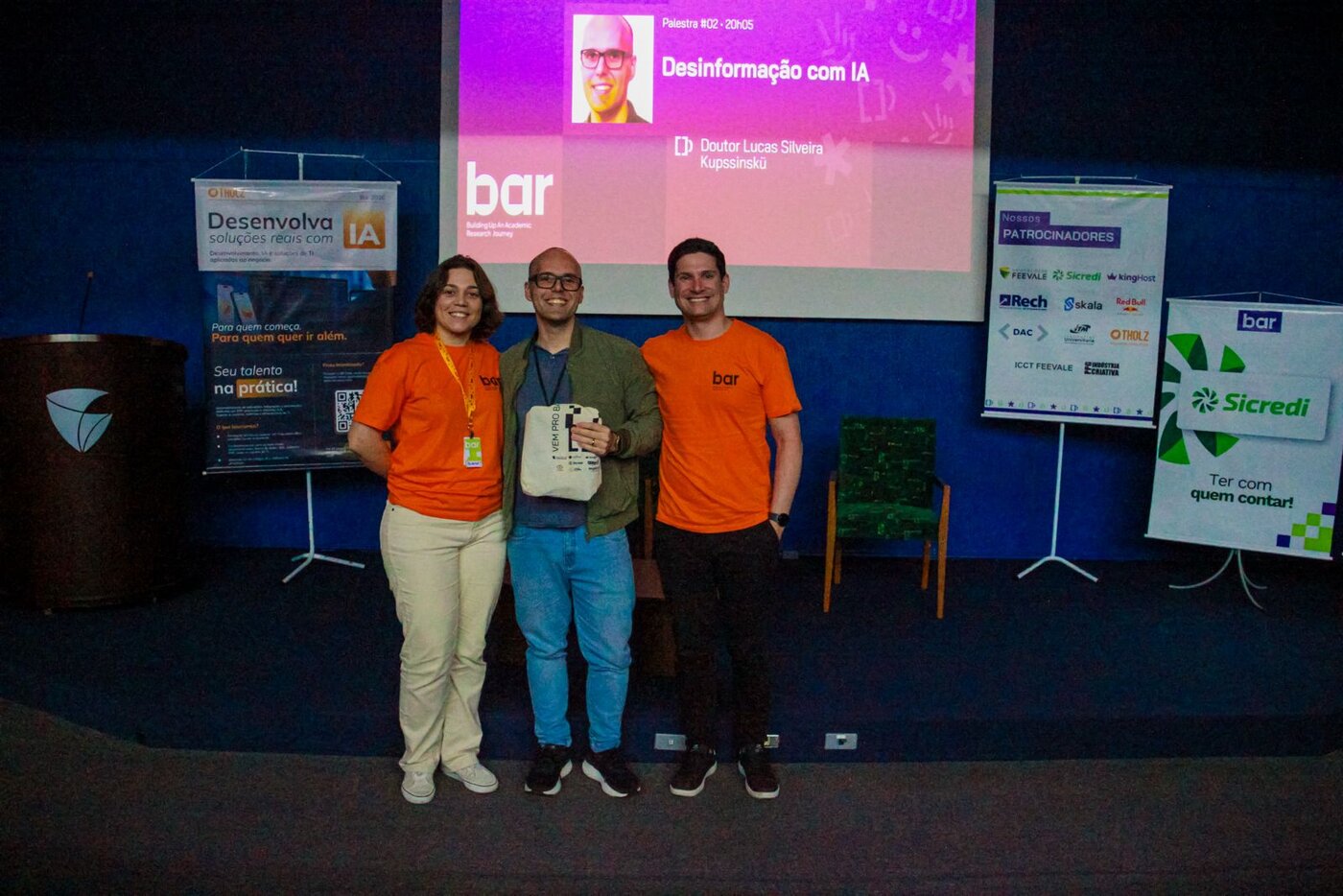
On October 7 I was at Universidade Feevale as an invited speaker at BAR 2026 (Building Up An Academic Research Journey) to talk about misinformation detection with AI and present results of the Misinformation Identification with LLMs project, funded by CNPq and FAPERGS, which I coordinate at MALTA (Machine Learning Theory and Applications Lab) at PUCRS.
Two recent results of the project:
- Latent Fact-Checking: Detecting Misinformation through Activation Engineering, accepted at BRACIS 2026 and nominated for Best Paper. We show that the veracity of a claim appears as a direction in the representation space of an LLM. That direction can be estimated and used to classify claims, with no fine-tuning and no search for external evidence.
- Less is More: Improved Fact-Checking on AVeriTeC with Iterative Question Generation, accepted at ENIAC 2026. Iterative question generation improves fact-checking on the AVeriTeC benchmark while asking fewer questions than previous approaches.
Pedro Barcelos and Lucas Fraga lead these works together with me and my colleague Rodrigo C. Barros. We will present both papers next week at BRACIS, in Cuiabá.
Discussing this topic with IT students from the Vale dos Sinos region was a reminder of why this project exists: misinformation is everyone's problem, and the tools to fight it need to work in Portuguese.
My thanks to Blanda Mello and Diego Pinheiro for the invitation and for organizing a free AI event of this quality.
No dia 7 de outubro estive na Universidade Feevale como palestrante do BAR 2026 (Building Up An Academic Research Journey) para falar sobre identificação de desinformação com IA e apresentar resultados do projeto Identificação de Desinformação com LLMs, financiado pelo CNPq e pela FAPERGS, que coordeno no MALTA (Machine Learning Theory and Applications Lab) na PUCRS.
Dois resultados recentes do projeto:
- Latent Fact-Checking: Detecting Misinformation through Activation Engineering, aceito no BRACIS 2026 e indicado a Best Paper. Mostramos que a veracidade de uma afirmação aparece como uma direção no espaço de representações de um LLM. Essa direção pode ser estimada e usada para classificar afirmações, sem fine-tuning e sem busca por evidências externas.
- Less is More: Improved Fact-Checking on AVeriTeC with Iterative Question Generation, aceito no ENIAC 2026. A geração iterativa de perguntas melhora a verificação de fatos no benchmark AVeriTeC, com menos perguntas do que as abordagens anteriores.
Pedro Barcelos e Lucas Fraga conduzem esses trabalhos junto de mim e do meu colega Rodrigo C. Barros. Apresentaremos os dois trabalhos na semana que vem, no BRACIS, em Cuiabá.
Conversar sobre esse tema com estudantes de TI do Vale dos Sinos foi um lembrete de por que esse projeto existe: desinformação é um problema de todo mundo, e as ferramentas para enfrentá-lo precisam funcionar em português.
Obrigado a Blanda Mello e Diego Pinheiro pelo convite e pela organização de um evento gratuito de IA com esse nível.