Oct 2026 Out 2026
Best Paper Award at BRACIS 2026 Best Paper Award no BRACIS 2026
Latent Fact-Checking wins first place · BRACIS 2026 · Cuiabá, Mato Grosso · Six papers at BRACIS and three at ENIAC Latent Fact-Checking fica em primeiro lugar · BRACIS 2026 · Cuiabá, Mato Grosso · Seis artigos no BRACIS e três no ENIAC
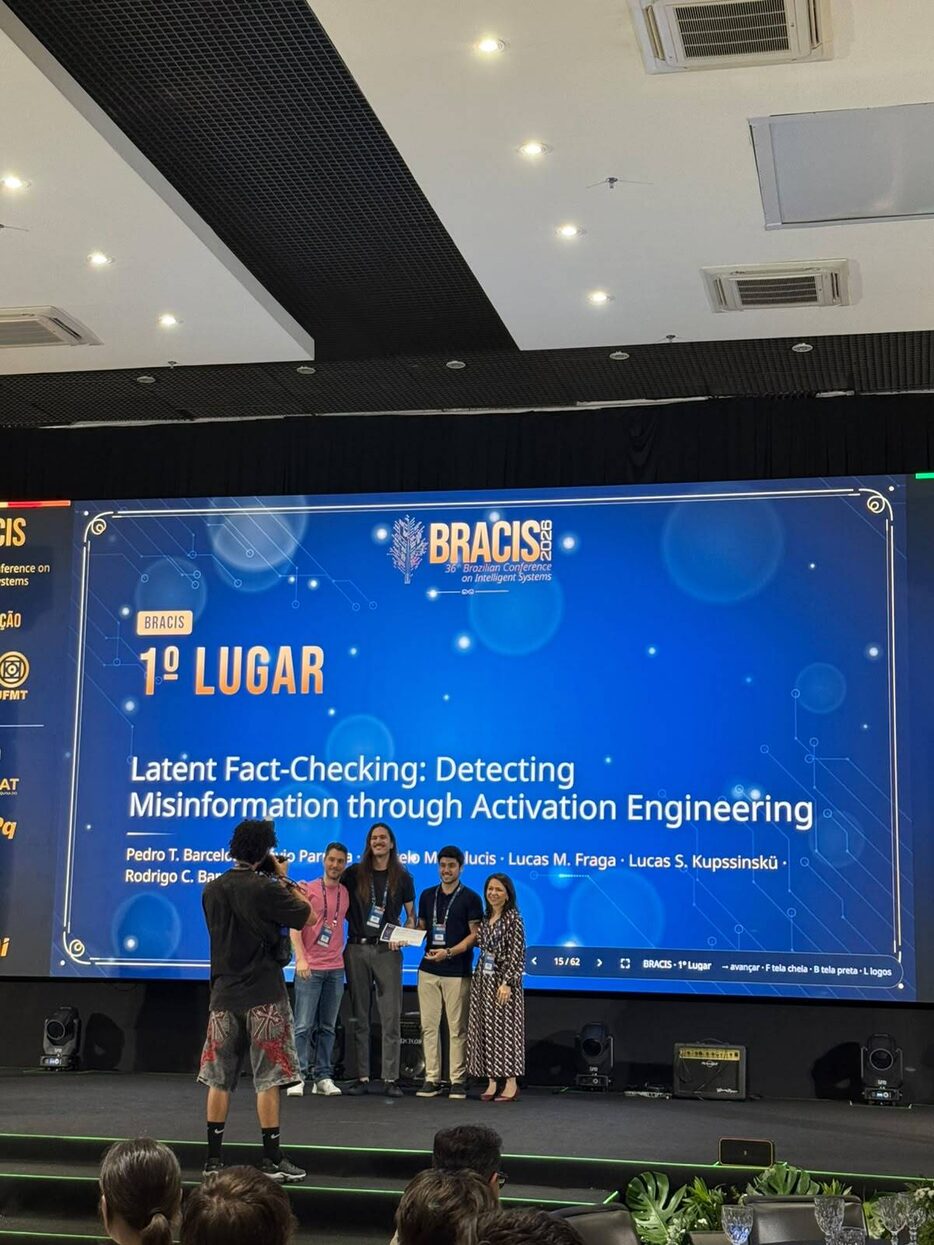
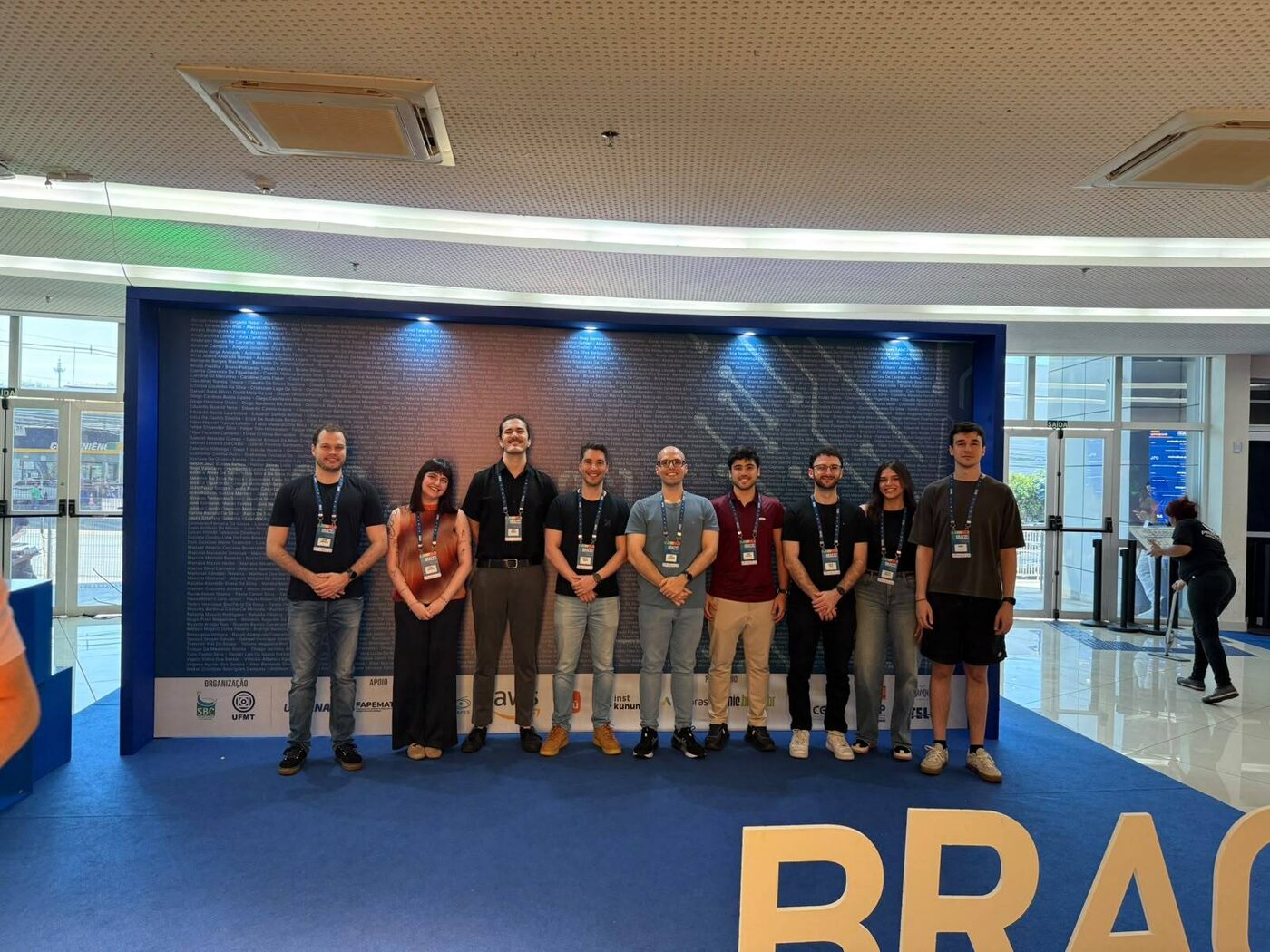
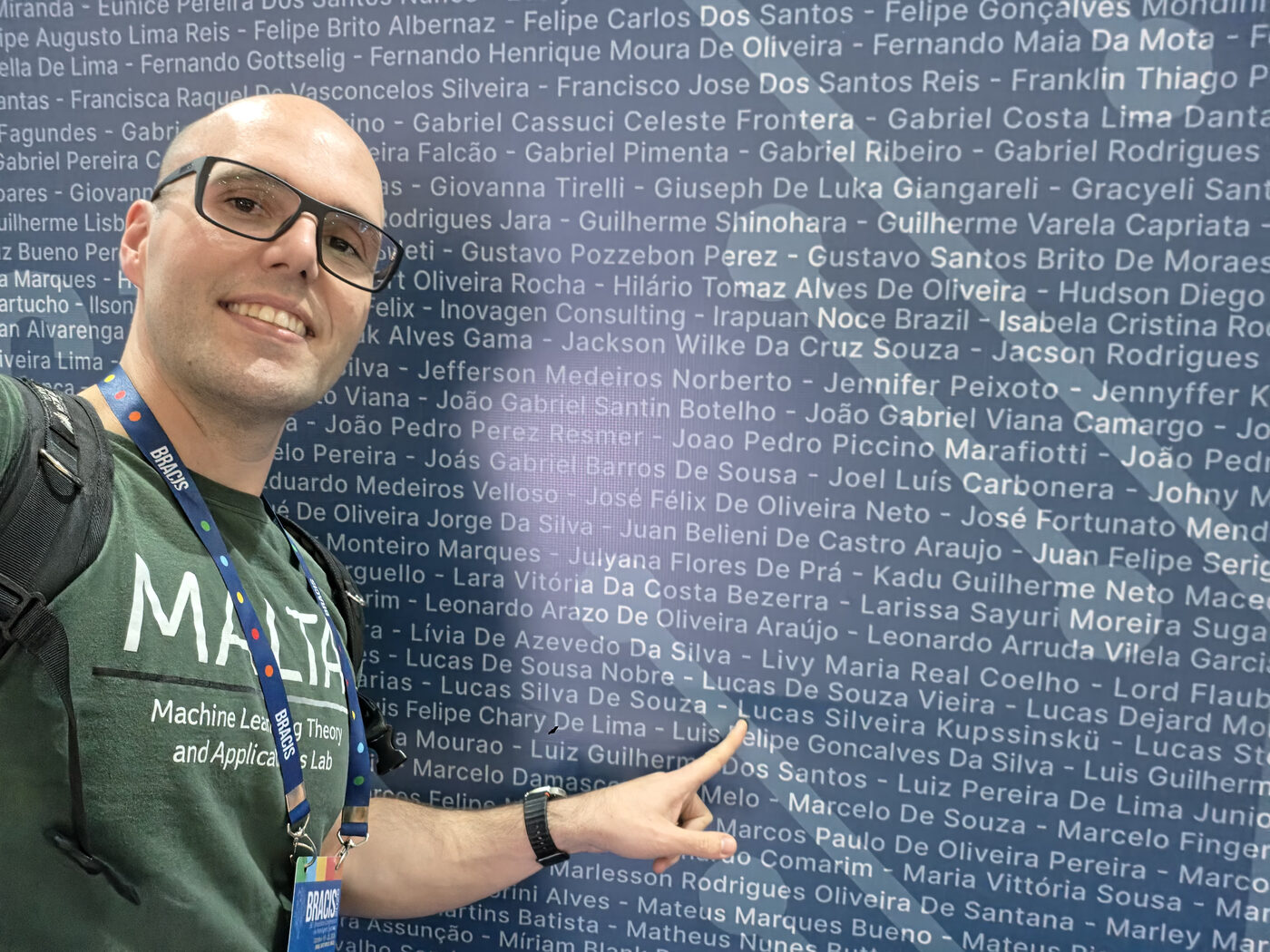
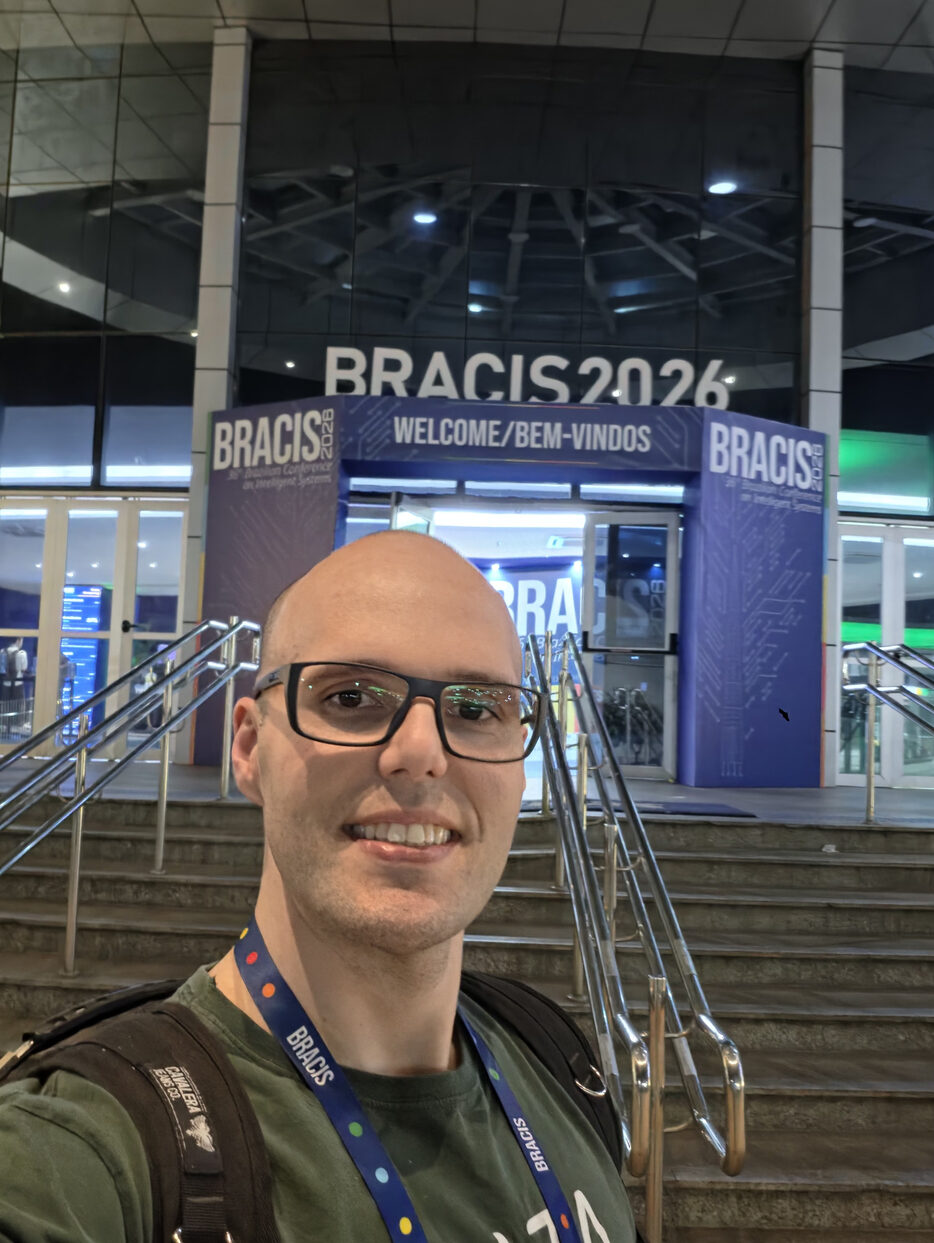
Latent Fact-Checking: Detecting Misinformation through Activation Engineering won the Best Paper Award, first place, at BRACIS 2026, the 36th Brazilian Conference on Intelligent Systems, held in Cuiabá from October 19 to 22. The paper is by Pedro T. Barcelos, Otávio Parraga, Marcelo M. Delucis, Lucas M. Fraga, Rodrigo C. Barros, and me, and it is a result of the Misinformation Identification with LLMs project, funded by CNPq and FAPERGS, at MALTA (Machine Learning Theory and Applications Lab) at PUCRS.
The paper shows that the veracity of a claim appears as a direction in the representation space of an LLM. We estimate that direction from the model's activations and project new claims onto it to reach a verdict, with a single forward pass, a frozen model, and no search for external evidence. The award was selected among the 228 full papers accepted this year. The preprint is on arXiv.
Congratulations to Pedro, who led the work as an M.Sc. student advised by Rodrigo and co-advised by me, and to all coauthors. The award recognizes a line of research the group has been building for the last two years, and it is a strong motivation to keep working on fact-checking tools that work in Portuguese.
The group also presented five other papers at BRACIS 2026:
- Continual Learning for Sequential Personalization of Small Language Models: A Stability Monitoring Analysis
- Anatomical Mask Conditioning for Low-Dose CT Denoising: An Architecture-Aware Investigation
- The Role of Contextual Grounding in Geoscience Benchmarks
- FairMOP: Benchmarking Fairness-Utility Trade-offs in Text-to-Image Models via Pareto Frontiers
- Diffused Embeddings: Exploring Sentence Representations from DLMs
And three papers at ENIAC 2026, co-located with BRACIS:
- Less is More: Improved Fact-Checking on AVeriTeC with Iterative Question Generation
- Evaluation of Denoising Architectures on a Reconstructed Ultra-Low-Dose CT Dataset
- Knowledge Distillation and Composite Loss as a Low-Resource Strategy for LDCT Image Denoising
It was a good week for the lab: nine papers, a large group of students presenting their own work, and a Best Paper Award to bring home. My thanks to the BRACIS 2026 organizers at UFMT and SBC for a well-run conference.
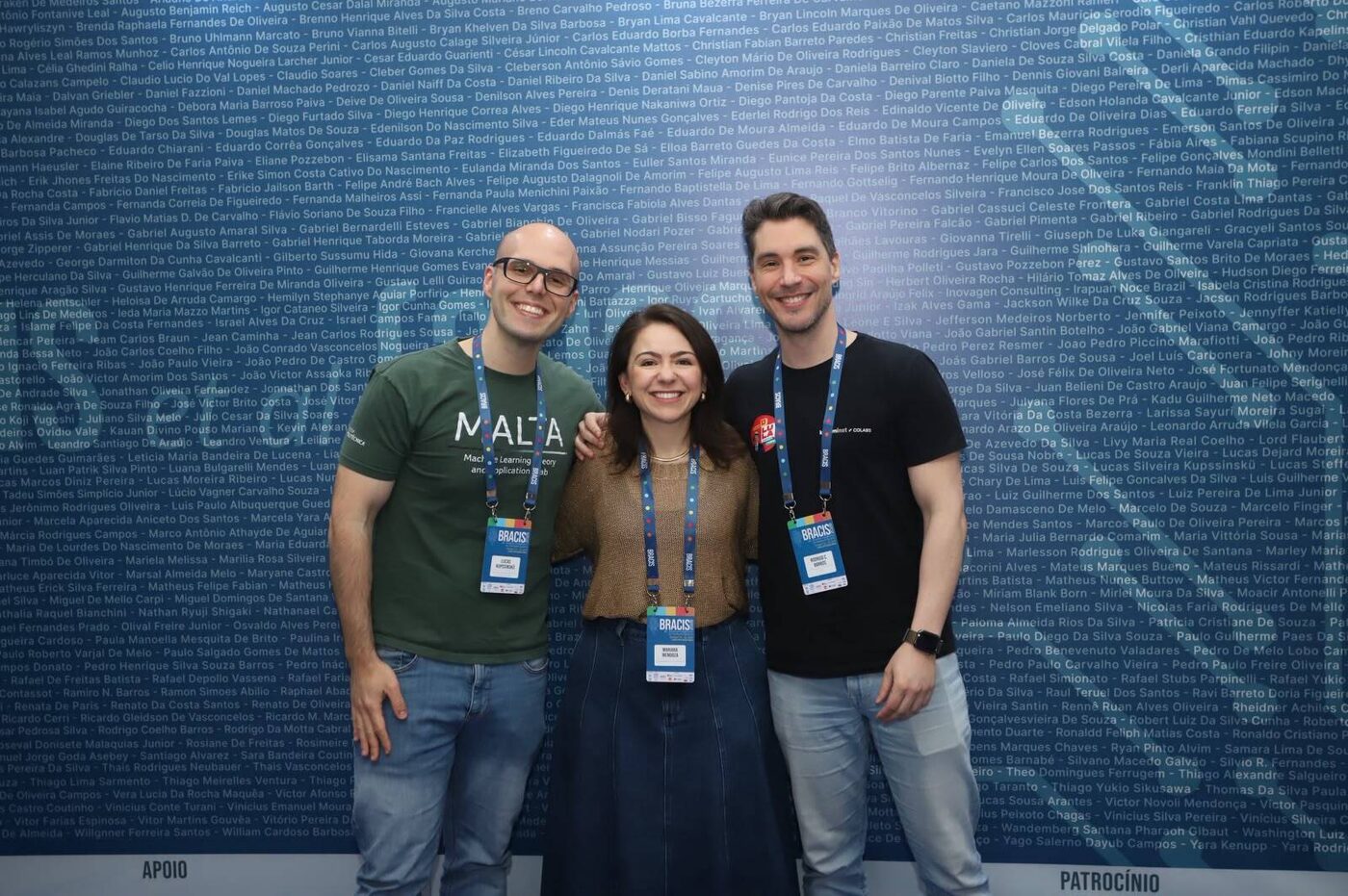
And one more piece of news: BRACIS 2027 will be in Porto Alegre. Rodrigo C. Barros, Mariana Recamonde-Mendoza, and I are bringing the conference to our city next year. See you here!
Latent Fact-Checking: Detecting Misinformation through Activation Engineering recebeu o Best Paper Award, primeiro lugar, no BRACIS 2026, a 36ª Brazilian Conference on Intelligent Systems, realizada em Cuiabá de 19 a 22 de outubro. O artigo é de Pedro T. Barcelos, Otávio Parraga, Marcelo M. Delucis, Lucas M. Fraga, Rodrigo C. Barros e meu, e é um resultado do projeto Identificação de Desinformação com LLMs, financiado pelo CNPq e pela FAPERGS, no MALTA (Machine Learning Theory and Applications Lab) na PUCRS.
O artigo mostra que a veracidade de uma afirmação aparece como uma direção no espaço de representações de um LLM. Estimamos essa direção a partir das ativações do modelo e projetamos novas afirmações sobre ela para chegar a um veredito, com um único forward pass, o modelo congelado e sem busca por evidências externas. O prêmio foi escolhido entre os 228 artigos completos aceitos neste ano. O preprint está no arXiv.
Parabéns ao Pedro, que conduziu o trabalho como mestrando orientado pelo Rodrigo e coorientado por mim, e a todos os coautores. O prêmio reconhece uma linha de pesquisa que o grupo vem construindo nos últimos dois anos e é um forte incentivo para seguir trabalhando em ferramentas de verificação de fatos que funcionem em português.
O grupo também apresentou outros cinco artigos no BRACIS 2026:
- Continual Learning for Sequential Personalization of Small Language Models: A Stability Monitoring Analysis
- Anatomical Mask Conditioning for Low-Dose CT Denoising: An Architecture-Aware Investigation
- The Role of Contextual Grounding in Geoscience Benchmarks
- FairMOP: Benchmarking Fairness-Utility Trade-offs in Text-to-Image Models via Pareto Frontiers
- Diffused Embeddings: Exploring Sentence Representations from DLMs
E três artigos no ENIAC 2026, realizado junto ao BRACIS:
- Less is More: Improved Fact-Checking on AVeriTeC with Iterative Question Generation
- Evaluation of Denoising Architectures on a Reconstructed Ultra-Low-Dose CT Dataset
- Knowledge Distillation and Composite Loss as a Low-Resource Strategy for LDCT Image Denoising
Foi uma boa semana para o laboratório: nove artigos, um grupo grande de estudantes apresentando seus próprios trabalhos e um Best Paper Award para trazer para casa. Obrigado à organização do BRACIS 2026, na UFMT e na SBC, pela conferência bem conduzida.
E mais uma novidade: o BRACIS 2027 será em Porto Alegre. Rodrigo C. Barros, Mariana Recamonde-Mendoza e eu estamos trazendo a conferência para a nossa cidade no ano que vem. Nos vemos aqui!